

Randy Rick and the Championship Culture Club

Updated: Sep 7
by A.G. "Press Release 9/4/26

Every coach has talent. Some find themselves in the bubble more often then not. Right there knocking on the championship door. The basket no longer has the strength of a backboard. Its just made up of another bubble. Not just one bubble but many. Its finding out the differences in culture of those teams bound for the bubble and those made of something a little different.
Every coach knows the feeling. The team has talent. The gym has energy. The practice plan is tight. Still, something is missing.
A player rushes a big shot after making ten in a row during drills. Another struggles with confidence after one mistake. A team talks about leadership, but only when things are going well. Recruiting questions, nutrition habits, recovery, pressure, communication, and personal choices all show up during the season, but they rarely fit neatly into a two-hour practice.
That gap is where Coach Randy Rick believes teams need more help.
A.G. sat down with Rick of R0XT Championship Culture Club to talk about why his life in basketball led him to launch the Championship Culture Club , an eight-week performance-development experience done remotely for high school teams and competitive programs across the country to come together in an office style environment. This demonstrates the space where the homework comes into play.
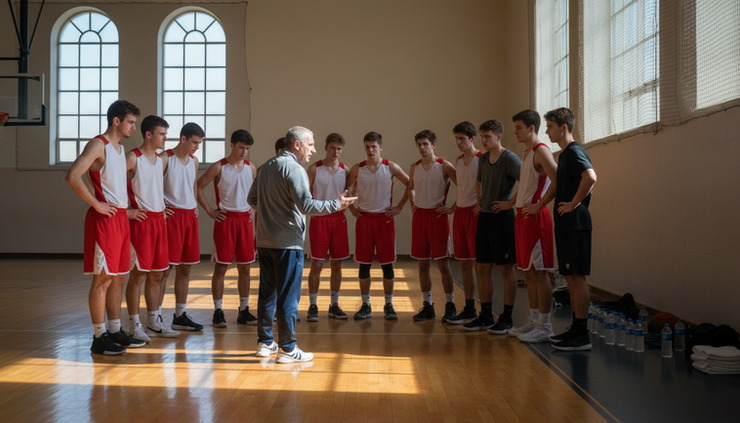
Basketball Genie sits down with Coach Randy Rick
A.G. : Coach Rick, your basketball path covers almost every level of the game. Red Bluff High School standout, Butte College national free-throw leader, Chico State record-setting shooter, conference champion, professional player in Australia, international scorer, professional coach, college coach, high school coach, six-time Golden Valley Conference Coach of the Year, and 21 seasons leading Feather River College. When you look at that full journey, what pushed you toward this program?
Randy Rick: The game gave me a full education. Shooting taught me discipline. Free throws taught me pressure. Playing overseas taught me adaptability. Coaching taught me that talent is only part of the equation.
A lot of players can run a play. A lot of players can get shots up. But the complete athlete has to manage much more than the action between the lines. They have to lead, communicate, recover, handle expectations, and make decisions when nobody is clapping for them.
That is what pushed me toward Championship Culture Club.
A.G. : So this is not just another clinic?
Rick: No. Clinics have value. Skill training has value. Practices have value. But this program is built for the athlete behind the uniform.
The goal is simple: build the player, build the person, build the team.
Why Randy Rick’s playing career matters to the program
Rick’s résumé reads like a basketball life built through repetition and pressure.
At Red Bluff High School, he was a standout. At Butte College, he became a national free-throw leader, a title that says plenty about routine, focus, and nerve. At Chico State, he set shooting records and won as a conference champion. Then came professional basketball in Australia, where he became a 29-point-per-game international scorer and produced two credited 50-point professional performances.
Those numbers matter, but Rick does not present them as trophies on a shelf. He talks about them as lessons.
A.G. : When people hear “record-setting shooter” or “50-point professional game,” they may think the lesson is score more. Is that how you see it?
Rick: Not really. Scoring comes from habits. Shooting comes from honesty. You cannot be a great shooter and lie to yourself every day. Your footwork is either right or it is not. Your follow-through is either consistent or it is not. Your preparation shows up when your legs are tired and the gym gets loud.
That applies to life too. Players need to learn how to prepare, how to respond, and how to stay steady.
A.G. : Free throws seem like a good picture of that.
Rick: They are. Nobody guards you. Everybody watches you. The ball is in your hands, and there is nowhere to hide. That moment teaches a player how to breathe, think, trust, and execute.
“The complete athlete has to learn what to do before the pressure arrives, not just how to survive it once it gets there.”
Rick’s shooting background gives the program a practical foundation. He understands mechanics. He understands repetition. He understands confidence. More than that, he understands how fragile performance can be when a player has never been taught how to manage the mental and personal demands around the game.

The coaching years shaped the bigger vision
Playing can teach a person how to perform. Coaching teaches a person how many different things affect performance.
Rick has coached internationally, at the professional level, in high school settings, and across college basketball. His 21 seasons leading Feather River College placed him inside the long work of building teams year after year. Being named Golden Valley Conference Coach of the Year six times reflects more than one good roster or one hot season. It points to program-building.
A.G. : What did 21 seasons at Feather River teach you that a single season never could?
Rick: Patterns. You start to see what keeps showing up. Every team has talent. Few teams maximize it. Some teams have strong chemistry early, then lose it when roles change. Some teams look great in practice, then tighten up in games. Some players want to lead, but they do not know what leadership sounds like when a teammate is struggling.
After enough seasons, you stop thinking culture is a slogan. You realize it has to be taught.
That idea sits at the center of the Championship Culture Club. Coaches already spend hundreds of hours teaching offense, defense, shooting, conditioning, plays, personnel, and strategy. They watch film. They manage lineups. They plan practices. They handle parents, travel, schedules, and scouting.
The missing piece is not that coaches do not care about the rest of the athlete’s development. It is that they often do not have a system or enough time to teach it.
Championship Culture Club exists to fill that space.
What the Championship Culture Club is built to teach.
The program is an eight-week development experience for high school basketball teams and competitive programs. It combines Rick’s basketball and leadership background with modern performance coaching through R0XT.
The structure addresses topics that shape how athletes perform, connect, and grow.
A team may have strong guards, length in the frontcourt, and a clear system. But if players do not know how to communicate under stress, handle mistakes, fuel their bodies, recover between demanding weeks, or take ownership of their decisions, the team leaves potential unused.
Key areas inside the program include:
Performance habits
Players learn how preparation, focus, and daily choices affect game-night performance.
Leadership and communication
Athletes learn what leadership looks like beyond speeches and captain titles.
Pressure and confidence
The program teaches players how to respond when shots do not fall, roles change, or expectations rise.
Fuel and recovery
Teams address the basic habits that help athletes practice, compete, and recover with more consistency.
Personal brand and decision-making
Players examine how choices, behavior, and public identity affect their future.
Recruiting and NIL awareness
Athletes learn how to ask better questions and understand the environment around modern basketball.
A.G. : That is a wide range. Why bring all of it together instead of focusing on one area?
Rick: Because players do not live in one area. A player’s confidence affects communication. Communication affects trust. Trust affects role acceptance. Recovery affects mood and effort. Decision-making affects opportunity. Recruiting pressure affects focus. It is all connected.
Rick’s point is not that basketball skill no longer matters. Skill still matters. Practices still matter. Defense, shooting, spacing, conditioning, and competition still matter.
The difference is that today’s athlete faces a larger performance environment. Phones, outside opinions, recruiting attention, social pressure, playing time anxiety, and identity all follow athletes into the gym. Teams cannot pretend those forces disappear at tipoff.

Why an eight-week format fits team development
An eight-week program gives teams time to do more than hear a message once.
A single talk can inspire players. A weekend clinic can add useful tools. But habits need repetition. Team language needs practice. Players need time to apply ideas, then return with real examples.
Basketball Genie: Why build it as an eight-week experience?
Rick: Teams need rhythm. One session can plant a seed, but eight weeks give players and coaches time to build shared language. They can try something in practice, experience it in a game, come back, talk about it, and improve.
That cycle matters.
A team might discuss communication in week one, then face a tight game where body language slips. The next session can connect the lesson to something real. A player might talk about confidence, then go through a shooting slump. The group can work through that experience while it is happening.
That is different from a one-time message.
The eight-week design also respects the pace of a basketball season. Teams do not need a separate identity project that competes with basketball. They need a program that supports the season and strengthens what the coach is already building.
What “complete athlete” means in real team life
The phrase “complete athlete” can sound broad until it shows up in specific moments.
It shows up when a player loses a starting spot and still practices with purpose. It shows up when a scorer becomes a better passer because the team needs it. It shows up when a quiet player learns to speak with confidence. It shows up when a team handles a road loss without splintering.
Rick’s program aims to make those moments teachable.
A talented player misses three shots early
A team faces a tough week of games and travel
A player gets recruiting interest
A team has internal tension
They learn to reset, defend, communicate, and stay connected
They learn to manage recovery, focus, and preparation
They learn to ask better questions and protect their habits
They learn to address conflict with maturity and respect
A.G. : Coaches talk about culture all the time. What do you think teams often miss?
Rick: They talk about the word, but sometimes they do not teach the behaviors. Culture is how players respond to correction. It is how they talk on the bus. It is how they treat the last player on the bench. It is how they handle success. It is what they do when the coach is not watching.
That answer captures the program’s larger purpose. Championship culture is not a poster. It is a set of repeated choices.
Why Rick wants to offer the program nationwide
Rick’s background gives him roots in Northern California basketball, but the issues he points to are not local. They appear in programs across the country.
High school teams in small towns, private school programs, large public schools, travel clubs, and competitive basketball organizations all face the same core challenge. They teach the game, but they also develop young people who are learning how to handle pressure, attention, failure, responsibility, and opportunity.
A.G. : Why take this beyond one campus or one program?
Rick: Because the need is everywhere. Coaches are trying to do the right things. Players are hungry to grow. But there is a real gap between talent and maturity, between ability and ownership. If we can help teams build that bridge, we should.
R0XT Championship Culture Club gives Rick a way to bring his expertise to more teams without replacing a coach’s voice. That distinction matters. A strong outside program should not take over the team. It should strengthen the standards already in place and give coaches shared language they can keep using.
The best version of the program works with the team, not around it.

The real promise of Championship Culture Club
The promise of Randy Rick and the Championship Culture Club Program Building Complete Athletes is not that every player becomes a star scorer. It is not that every team wins every close game. No serious coach would make that claim.
The promise is better than that.
It gives teams a system for teaching the parts of performance that often get left to chance. It helps players understand how their habits shape their results. It gives coaches language for leadership, confidence, recovery, communication, recruiting awareness, and responsibility. It treats the athlete as a whole person, not just a stat line.
A.G. : If a team finishes the eight weeks, what should be different?
Rick: They should know themselves better. They should communicate better. They should understand what winning habits look like. They should take more ownership of who they are becoming, both as players and as people.
That may be the heart of the whole idea.
Randy Rick has lived the game as a shooter, scorer, champion, professional player, international coach, college leader, and program builder. The Championship Culture Club turns those experiences into a practical path for teams that want more than talent.
Because the strongest programs do more than teach players where to stand on offense.
They teach them how to stand for something.

Comments